
Introduction: Will Gemini 4 Image Become the Next-Generation AI Image Generation Model?
AI image generation is evolving from simple text-to-image conversion into more sophisticated visual creation and editing workflows. Users no longer just want to generate a beautiful image. They also want models to accurately understand complex prompts, preserve product details, generate readable text, precisely modify designated areas, and maintain visual consistency across multiple rounds of editing.
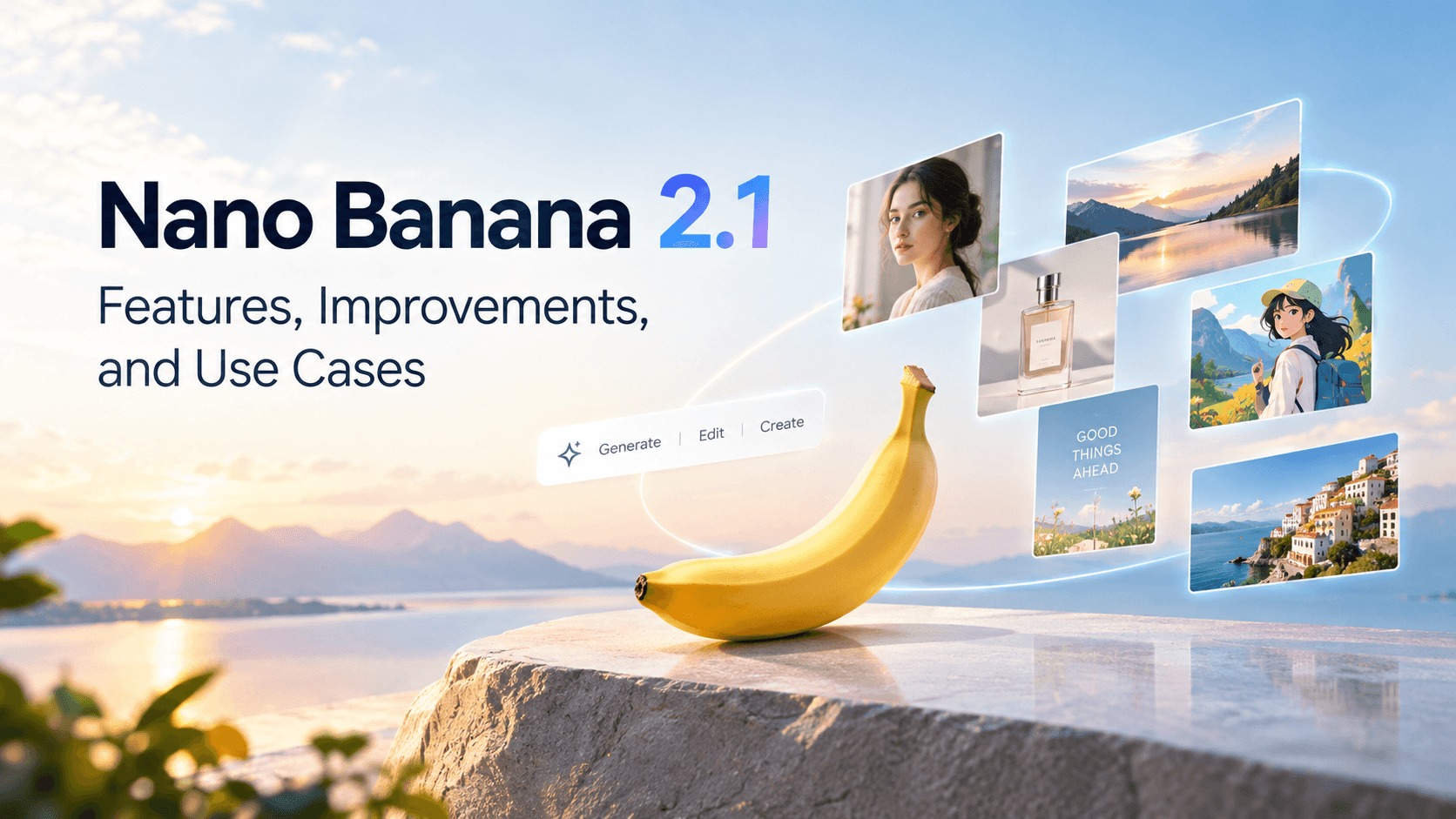
Google continues to develop its Gemini ecosystem, covering areas such as reasoning, multimodal understanding, and image generation. On October 1, 2026, Google announced Gemini 4 Argon, which focuses on complex reasoning, software engineering, enterprise knowledge work, and cybersecurity defense. Meanwhile, Google's Gemini Image image generation ecosystem continues to evolve, with Nano Banana 2.1 officially positioned as an image generation and conversational editing model that balances efficiency.
These developments raise an important question: Could Google launch a new generation of image generation models associated with Gemini 4?
Gemini 4 Image can serve as a keyword for discussing this possibility, but it is essential to clearly distinguish predictions from confirmed products. Building on existing technological developments, this article analyzes the capabilities this hypothetical model might offer.
What Is Gemini 4 Image?
Gemini 4 Image can be used to describe a potential next-generation image generation or image editing experience associated with Google's Gemini AI ecosystem.
Google's Gemini ecosystem supports multimodal interactions and can process different types of information, including text and images. Image generation capabilities further expand these interactions, allowing users to create visual content, modify existing images, and continuously refine generated results through natural language instructions.
It is important to distinguish between the overall Gemini ecosystem and a specific image model. Future image generation experiences may be powered by dedicated image models, integrate image capabilities into multimodal models, or combine multiple technical components to complete tasks.
Therefore, it is currently more appropriate to treat Gemini 4 Image as a forward-looking topic: a way to explore how AI image generation technology might evolve in the future.
Why Is Gemini 4 Image Worth Watching?
Interest in next-generation image models reflects changes in how people use generative AI. Today, the central question is no longer simply whether a model can generate images, but whether it can reliably understand creative requirements and help users continuously refine the results.
Image Models Are Becoming Better at Understanding Instructions
In early AI image generation workflows, users often had to repeatedly revise prompts to bring the results closer to their expectations. Even changing just a few words could lead to unexpected changes in composition, objects, lighting, or visual style.
More advanced image models should be able to understand the relationships between different instructions rather than treating every keyword as an independent visual signal.
For example, a user might want to generate a product image with a warm-colored background while requiring the product's shape, packaging, and logo to remain unchanged. The truly valuable capability is for the model to satisfy all these constraints simultaneously, rather than simply generating an image that roughly matches the description.
Therefore, more reliable instruction understanding is an important direction to watch in the future development of image generation systems. However, whether a specific Gemini model will deliver significant improvements still needs to be verified through practical testing.
The Importance of Visual Reasoning Is Increasing
Many image-related tasks require more than creating visually appealing scenes. They also require models to understand which objects appear in an image, the spatial relationships between those objects, which visual elements are most important, and which areas should not be modified.
This capability is particularly important when users provide reference images. Generated results may need to preserve a person's pose, a room's layout, a product's shape, or the relationships between multiple objects.
Better visual reasoning could make image generation more controllable and reduce the need for repeated manual adjustments. However, whether future Gemini image models will deliver measurable improvements remains uncertain.
The Industry Is Moving from Single-Image Generation to Complete Creative Workflows
AI image tools are increasingly used for product photography, social media visuals, character design, advertising concepts, and visual storytelling. In these workflows, generating the initial image is usually only the first step.
Users may also need to remove unwanted objects, replace backgrounds, adjust lighting, modify clothing, extend the canvas, or generate images in multiple sizes for different platforms.
If future image models can integrate these tasks into coherent editing workflows, they could deliver greater practical value. The key to determining whether a tool is effective is not how many features its product page lists, but whether those features work together while preserving the visual elements users want to keep unchanged.
Gemini 4 Image Feature Predictions: Six Directions Worth Watching
The following predictions are based on current trends in AI image generation technology. They are not officially confirmed specifications for a Gemini 4 Image product.
1. More Accurate Understanding of Complex Prompts
One potential improvement worth watching is whether models can handle long prompts containing multiple constraints more reliably.
A typical creative brief may simultaneously specify the subject, composition, camera angle, lighting, background, materials, color palette, and intended use. It may also include restrictions such as prohibiting changes to a logo or preventing additional objects from appearing.
More advanced models may be better able to distinguish primary objectives from secondary visual details and maintain consistent instructions across multiple rounds of conversation and continuous editing.
For users, this could mean fewer repeated prompt revisions and more predictable generation results. However, when instructions conflict or reference images do not provide sufficient information, users will still need to clarify task priorities.
2. More Reliable Text Rendering and Typography
Text rendering remains an important challenge in AI image generation. Posters, packaging, advertisements, book covers, and social media images typically require clearly readable text and carefully designed typography.
Future image models may further improve text placement, spelling, glyph shapes, alignment, and the coordination between text and other design elements.
This would be particularly valuable for marketing visuals and editorial graphics. If text generation becomes more reliable, users could spend less time correcting spelling errors and might not need to recreate text elements as frequently in other design software.
However, without practical evidence, it cannot be assumed that future models will have solved text rendering problems. Specific conclusions about spelling accuracy, multilingual support, or typography quality must be tested using representative examples.
3. More Precise Local Image Editing
Local editing refers to modifying only a specific part of an image while preserving the remaining areas as much as possible. For example, a creator might want to replace a background, change the color of a jacket, remove an object, or adjust the environment surrounding a product without regenerating the entire image.
Future image models may further improve their ability to identify editing regions and handle the boundaries between modified areas and the surrounding image.
The key metric for this capability is editing precision. Ideally, an edited result should complete the requested modification while avoiding unnecessary changes to the person's face, body proportions, product details, lighting, or overall composition.
This capability is particularly important for professional creative workflows because preserving existing visual information is often just as important as generating new content.
4. More Consistent People and Products
Visual consistency becomes particularly important when users need to generate a series of images featuring the same person, fictional character, or product.
For example, character design requires consistent facial features, hairstyles, clothing, and body proportions across different scenes. Product visuals may require packaging, labels, logos, and product structures to remain consistent across different backgrounds and camera angles.
Future image generation systems may improve their adherence to reference images, allowing the same character or product to maintain more stable visual characteristics across multiple generated images.
However, consistency is not a single metric. A model might preserve a person's overall appearance while changing certain facial details. It might also maintain a product's general silhouette while distorting the label on its packaging. These dimensions therefore need to be evaluated separately.
For advertising, storyboarding, comics, and branded visual asset creation, measurable improvements in consistency could provide greater practical value than simply increasing image resolution.
5. Stronger Control Using Multiple Reference Images
Many creative tasks require referencing multiple images rather than relying on a single reference. Users might provide a reference image of a person, another of an outfit, a third showing lighting, and an additional image for composition.
More advanced workflows may help models understand the specific purpose of each reference image and combine different visual information without confusing their respective content.
For example, a user could ask to place the person from the first reference image into the scene shown in the second reference image, while using the third image as a reference for color palette and lighting. The challenge is to preserve the designated elements while avoiding the incorrect copying of irrelevant details or uncontrolled blending between different references.
If future models can handle multiple reference images more reliably, users may spend less time describing individual visual details in text. However, the actual performance of reference image control still needs to be tested across different subjects and image types.
6. More Efficient Professional Image Workflows
Future improvements in image models may also be reflected in the overall creative process, rather than only in the quality of individual generated images.
Potential improvements include more convenient iterative editing, more predictable editing results, more consistent image variations, clearer reference image control, and better collaboration with design and content production tools.
For example, advertising creators may need to generate images in multiple aspect ratios for the same marketing campaign. Visual storytellers may need the same character to appear across several consecutive scenes. E-commerce sellers may need to generate multiple visual assets featuring a product in different display settings while keeping the product itself unchanged.
The practical value of an image model depends on whether it can reliably complete these interconnected tasks. When evaluating a new tool, users should consider generation quality, editing precision, visual consistency, iteration efficiency, and compatibility with existing workflows.
These are all potential directions for future development. They do not mean that Gemini 4 Image has been confirmed to offer these capabilities.
How to Prepare for the Next Generation of AI Image Models
Creators do not need to wait until new models are officially released to start optimizing their image generation workflows. Developing a few practical habits can help them evaluate and use new tools more efficiently when they become available.
Identify the Most Important Visual Constraints
Before generating an image, determine which elements must remain unchanged. These may include a person's identity, a product's shape, a logo, a specified composition, or the relationships between multiple objects.
Distinguish these essential requirements from adjustable elements such as background colors, lighting, and decorative details. Establishing priorities makes it easier to determine whether the generated result truly meets the requirements.
Use Reference Images with a Clear Purpose
Reference images can communicate many details that are difficult to describe accurately in text, but each reference image should have a clearly defined purpose.
For example, one image can establish the subject, another can define the composition, and a third can serve as a reference for the overall visual style. Clearly explaining these purposes can help reduce ambiguity and make the results easier to evaluate.
Evaluate Editing Capabilities, Not Just Image Quality
An attractive initial generation does not necessarily mean that a model has equally strong editing capabilities. When testing a model, try modifying one designated element while requiring the remaining areas to stay consistent.
For example, replace a background without changing the product; adjust lighting without changing a person's identity; or remove an object without damaging the surrounding scene.
These tests can help determine whether a model truly understands precise instructions and can preserve existing visual information.
Evaluate Consistency Across Multiple Outputs
If a workflow requires a series of related images, test multiple results rather than judging a model's capabilities based on a single generation.
You can compare the appearance of the same character across different scenes or check whether a product retains the same shape, color, and packaging details across different compositions. Recording both successful and unsuccessful examples helps establish a more objective assessment.
This is the only way to distinguish a genuinely reliable creative workflow from an impressive result produced by chance.
Frequently Asked Questions
What Features Might Gemini 4 Image Support in the Future?
Potential development directions include more accurate prompt understanding, more reliable text rendering, more precise local editing, greater consistency in people and products, better control using multiple reference images, and more efficient creative workflows. These are predictions rather than confirmed product specifications.
Might Gemini 4 Image Generate Consistent Characters in the Future?
Character consistency is an important direction in AI image generation. Future models may improve their ability to follow reference images when generating the same character across multiple scenes, but their actual performance still needs to be evaluated through repeated generations and different compositions.
How Should a New AI Image Model Be Evaluated?
Use real creative tasks to test instruction-following capabilities, image quality, local editing precision, text rendering, reference image control, consistency across different outputs, and the amount of manual correction required.
Conclusion: Focus on Verifiable Technological Progress, Not Just Model Names
Gemini 4 Image is a forward-looking search topic worth watching because it relates to the development of Google's advanced models and the ongoing evolution of AI image generation technology.
Current technological trends indicate that important areas to watch include more accurate instruction understanding, more reliable typography, more precise image editing, more consistent visual results, and more mature professional creative workflows. Improvements in these areas could make AI image generation more suitable for design, marketing, visual storytelling, and everyday content creation.
Until Google releases confirmed information about a specific model, the most prudent approach is to distinguish potential technological developments from capabilities that have already been verified. Once new tools are officially released, their performance should be evaluated through real creative tasks rather than judged solely on the basis of predictions.